
Inheritance Tax planning in plain English
Find out whether your estate is likely to pay Inheritance Tax, and what you can do now – through gifts, your will and the reliefs available – to pass more on to your family.
- Estate reviewed against the 2026/27 bands
- Gifts, allowances and reliefs explained clearly
- Fixed fee agreed before we start
Inheritance Tax
How we help
Estate review
We list what you own, value it with you and estimate the Inheritance Tax your estate could face today.
Planning options
Gifts, the seven-year rule, pensions, trusts and charitable giving – explained so you can decide what suits your family.
Working with your solicitor
We share figures and tax advice with your solicitor or will-writer so your will and your tax plan line up.
How Inheritance Tax works
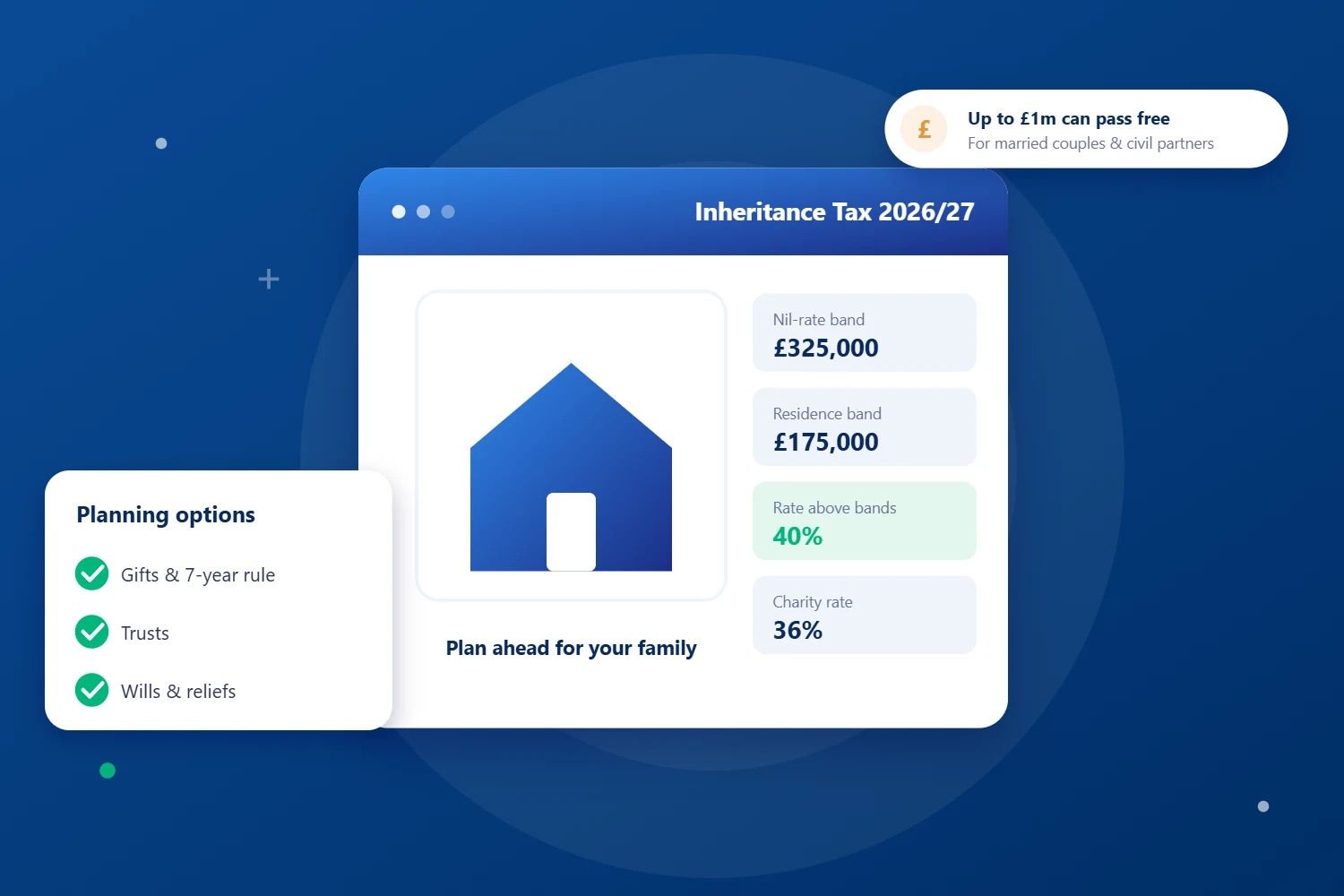
Inheritance Tax is charged at 40% on the part of an estate above the tax-free threshold. For 2026/27 the main allowances are:
| Allowance | Amount |
|---|---|
| Nil-rate band | £325,000 per person |
| Residence nil-rate band (home left to children or grandchildren) | Up to £175,000 per person |
| Rate above the bands | 40% |
| Reduced rate if 10% or more of the net estate goes to charity | 36% |
Unused bands can pass to a surviving spouse or civil partner, so a married couple can leave up to £1 million free of Inheritance Tax where the full residence band applies. The residence band tapers away for estates worth more than £2 million.
Gifts and the seven-year rule
Gifts to individuals made more than seven years before death are normally outside your estate. Gifts made within seven years may be taxed, with taper relief reducing the tax if the gift was made between three and seven years before death. Some gifts are exempt straight away:
- the £3,000 annual exemption (plus any unused amount from the previous year)
- small gifts of up to £250 per person per year
- wedding gifts of up to £5,000 to a child, £2,500 to a grandchild or £1,000 to anyone else
- regular gifts out of surplus income that don’t reduce your standard of living
- gifts to a spouse or civil partner living in the UK, and gifts to charity
Changes you should know about
- Business and agricultural property relief: from 6 April 2026, 100% relief applies to the first £2.5 million of combined qualifying business and agricultural property, with 50% relief above that.
- Pensions: from 6 April 2027, most unused pension funds and death benefits are due to be included in the estate for Inheritance Tax.
- Frozen thresholds: the nil-rate and residence bands are frozen, so rising house prices are pulling more estates into Inheritance Tax each year.
When is Inheritance Tax paid?
Any Inheritance Tax is normally due by the end of the sixth month after the month of death, and interest is charged after that. Tax on property can often be paid in instalments over ten years. Executors usually need to pay at least part of the tax before probate can be granted, so planning ahead also helps your family with cash flow.
Plan ahead with an accountant
Estate reviews and Inheritance Tax planning for a fixed fee, agreed after a free first conversation.
Frequently asked questions
Will my estate pay Inheritance Tax?
Only if its value, after debts and exemptions, is above the allowances that apply to you. Many estates pay nothing, but homes, savings, investments and – from April 2027 – pensions all count, so it’s worth checking.
Is the first conversation free?
Yes. We’ll talk through your situation, tell you whether planning is likely to help and give you a fixed fee before any work starts.
Can I give my house to my children to avoid Inheritance Tax?
Usually not if you carry on living there without paying a market rent – it’s treated as a gift with reservation and stays in your estate. There are other options, and we can explain them.
Do you write wills?
We don’t draft wills ourselves, but we work alongside your solicitor or will-writer so the tax side is right.
Can you help executors after someone has died?
Yes. We can prepare the estate’s tax figures, the deceased’s final tax return and any estate income tax returns.