
Tax returns and accounts for landlords
Rental accounts, Self Assessment and Making Tax Digital for landlords – from one buy-to-let to a growing portfolio, handled by an accountant who claims every allowable cost.
- Rental income and expenses worked out for you
- MTD quarterly updates if you’re in scope
- Capital Gains Tax on property sales reported in time
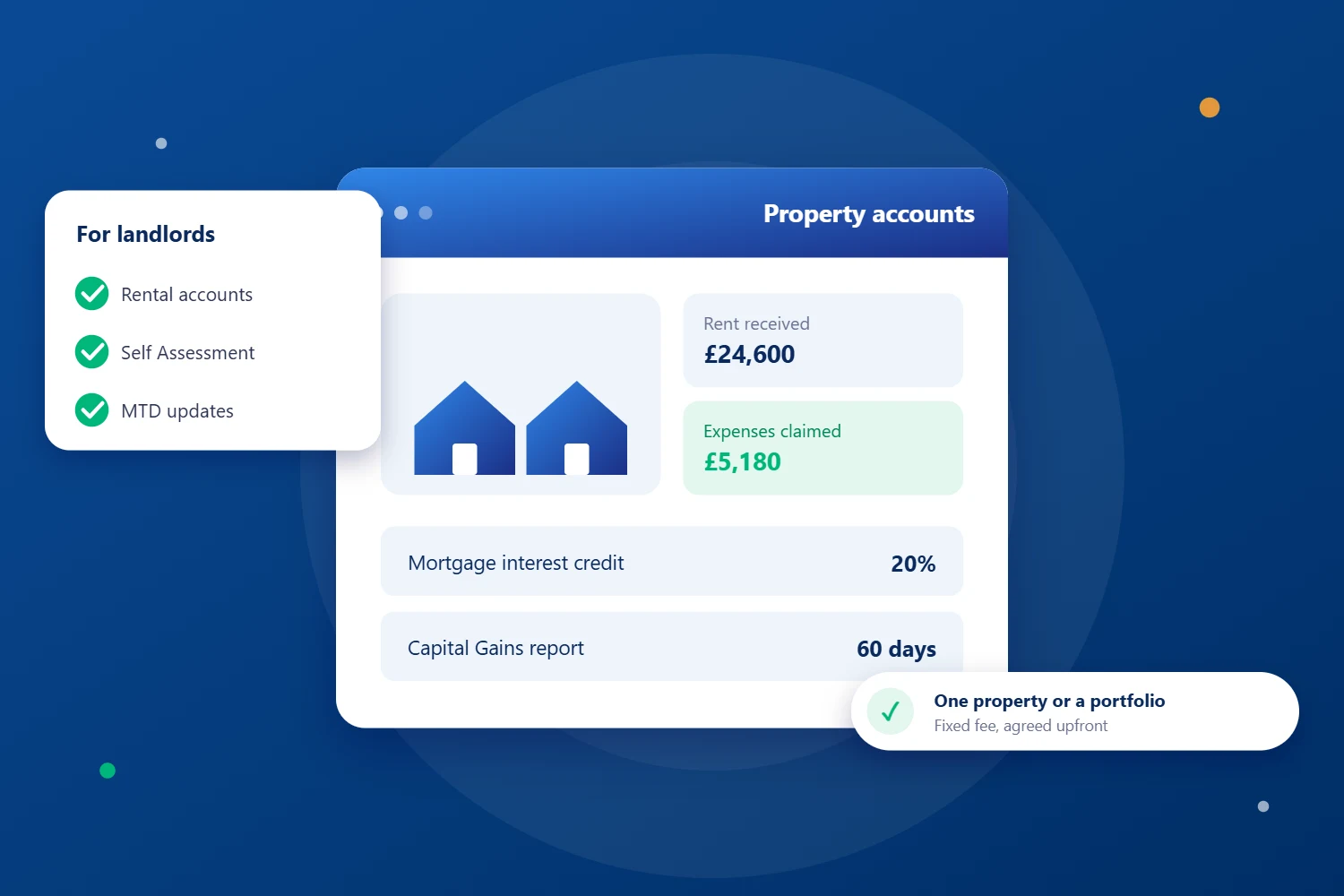
Landlord & property tax
What we do for landlords
Rental accounts
We turn your statements and letting-agent reports into clear property accounts, claiming allowable costs and mortgage interest relief correctly.
Self Assessment and MTD
Your property income goes on your tax return – and if you’re over the MTD threshold, we file your quarterly updates too.
Selling a property
We calculate the Capital Gains Tax, report it and pay it within the 60-day deadline, using any losses and reliefs available.
What you can claim against rental income
You pay Income Tax on your rental profit, not your total rent. Allowable costs include:
- letting agent and management fees
- repairs and maintenance (but not improvements)
- insurance, ground rent and service charges
- council tax and utility bills you pay for the tenant
- replacing furniture, appliances and other domestic items
- accountancy fees, legal costs for lets under a year, and travel to the property for letting purposes
If your total property income is £1,000 or less, the property allowance may mean you don’t need to report it at all.
Mortgage interest relief (Section 24)
Individual landlords can’t deduct mortgage interest as an expense. Instead you get a tax credit worth 20% of the interest. Higher-rate taxpayers therefore get less relief than the interest costs them, which is one reason some landlords look at owning property through a limited company. We’ll show you the numbers both ways before you decide.
Making Tax Digital for landlords
If your combined property and self-employment income is over £50,000, Making Tax Digital for Income Tax applies to you from 6 April 2026, falling to £30,000 from April 2027. You’ll need to keep digital records and send quarterly updates. Jointly owned property counts at your share of the income. Read our MTD for landlords guide.
Property income tax rates are rising
From April 2027, property income is due to be taxed at separate property rates. Budget 2026 set them at 24% basic, 44% higher and 49% additional rate for England, Wales and Northern Ireland. Planning how you hold your properties and when you incur costs is becoming more important.
Selling a rental property
Capital Gains Tax on residential property is charged at 18% or 24% depending on your income. UK residents selling a residential property with tax to pay must report the sale and pay the tax within 60 days of completion, separately from their tax return. We’ll work out the gain, including allowable buying, selling and improvement costs, and file the report for you.
How it adds up
How much tax do landlords pay on rental income?
Landlord tax is worked out on profit, then reduced by the 20% credit for finance costs. The credit is limited to the lowest of your finance costs, your property profits and your income above the Personal Allowance (GOV.UK). A higher rate taxpayer with the same figures would pay £4,000 on the profit and still only get £800 back, which is why Section 24 hits higher earners hardest.
Worked example: one buy-to-let in 2026/27
- Rent received £12,000, allowable expenses £2,000, so rental profit is £10,000
- With a £30,000 salary, the whole profit falls in the basic rate band: 20% of £10,000 = £2,000
- Mortgage interest of £4,000 gives a 20% tax reduction of £800
- Tax on the rental income: £1,200
Reporting
When do landlords need to tell HMRC about rental income?
These limits come from GOV.UK: paying tax on rental income.
Up to £1,000
The first £1,000 of rental income is tax-free under the property allowance, so there is nothing to report.
£1,000 to £2,500
Contact HMRC. If you do not already file a return, HMRC can usually collect the tax through your tax code.
Over £2,500 after expenses
File a Self Assessment return. The same applies if rent is over £10,000 before expenses. Register by 5 October after the tax year.
Common situations
Which landlord situations need extra care?
Renting a room in your home?
Rent from a lodger in your own home is tax-free up to £7,500 a year, or £3,750 each if the income is shared (GOV.UK). Above that you choose between paying tax on the excess or on profit after expenses.
Not declared rent in the past?
HMRC’s Let Property Campaign lets landlords put earlier years right on better terms. Our Let Property Campaign calculator estimates the tax, interest and likely penalty first.
Joining Making Tax Digital?
If your qualifying income is over £50,000, quarterly updates started on 6 April 2026. See MTD for landlords and the MTD thresholds.
Fixed-fee landlord accounts
Landlord tax returns from £7.50 a month, and MTD for landlords from £15 a month. Fixed fees, agreed upfront.
Frequently asked questions
Do I need to file a tax return for one rented property?
Usually yes, if your rental income is over £1,000 a year. If it’s between £1,000 and £2,500 after expenses, you may be able to tell HMRC through your tax code instead – we’ll check which applies.
Should I put my properties into a limited company?
It depends on your income, borrowing and long-term plans. Moving existing properties can trigger Stamp Duty and Capital Gains Tax, so we’ll run the numbers before you decide.
I rent out a room in my home. Is that taxable?
Rent-a-room relief lets you earn up to £7,500 a year tax-free from a furnished room in your main home. Above that, you can choose how it’s taxed.
Can you help with property I own jointly?
Yes. Each owner reports their share of the income. We can prepare figures for both of you and make sure the split matches how the property is owned.
I live abroad and rent out UK property. Can you help?
Yes. We can register you for the Non-Resident Landlord Scheme, so your rent is paid without tax deducted, and prepare your UK tax return.